October 07, 2026


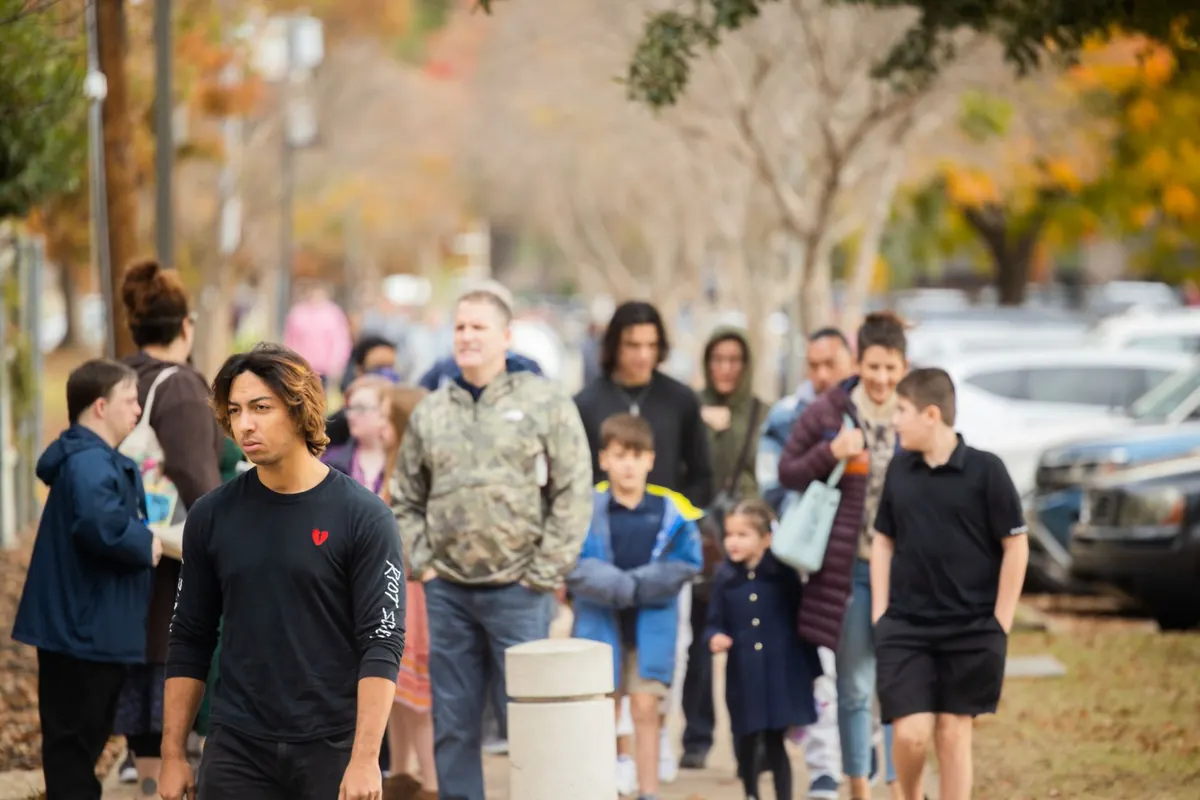
Two people, one street, forty minutes, no sign-up sheet. A prayer walk is what happens when you take the prayers you already pray for your neighborhood and pray them while standing in the middle of it. You notice the cracked sidewalk, the house where a hospice van has been parked all week, the kids waiting for the bus at 7:15. You pray for what you see, and you begin to see more.
A prayer walk is simply this: walking through a neighborhood and praying as you go. It can be done alone on a Tuesday morning. It can be done with three neighbors on a Thursday evening. It usually takes about as long as a walk around the block, which is part of why it works. It's small enough to actually happen.
It isn't a protest, a canvass, or a stealth evangelism campaign. Nobody's doorbell gets rung. You aren't praying at anyone. You are asking God to work in a place you love, and you're doing it on location rather than from your kitchen table.
That difference matters more than it sounds. Praying for your street from a chair is good and right. Praying for it while standing across from the playground where nobody plays anymore is different. The request gets specific. You become a witness to your own neighborhood instead of a distant well-wisher.
Before you invite anyone, learn the ground. Print a street map of your area, or pull one up on your phone and screenshot it. Choose a radius you can cover on foot in about forty-five minutes. For most people that's eight to twelve blocks. In rural areas, it might be one long road with four driveways on it. That's fine. Distance isn't the measure.
Then walk it once with no agenda at all. Look. Listen. Notice what has changed since you last paid attention.
Resist the urge to make the map exhaustive. You aren't producing a demographic report. You're making a list of places you're willing to keep showing up for.
Ask in person if you can. A group text to twenty people gets ignored; a question asked at the fence line gets answered. Keep the invitation plain: "I'm walking the block Thursday at seven and praying for the neighborhood. Want to come? No experience needed, about forty minutes."
Say what it is and how long it takes. Say what it isn't. Then let people decide. If someone says no, thank them and leave the door open—some of the best participants come the second time you ask.
Four to six people is a healthy size for a first walk. More than that and you're managing a group instead of praying. Invite one person who lives on the route. Their presence changes everything, because they know the history of the houses you're walking past.
A format that's too elaborate dies by week three. Try this:
Forty to fifty minutes, start to finish. Decide beforehand whether you're praying aloud as a group. Some people need the silence of walking to pray honestly; don't pressure them into speech.
Specific prayers come from specific attention. Once you're standing in a place, the words tend to arrive on their own. If you stall, here is a starting list:
Scripture gives you words when you run out of them. The Lord's Prayer works on a sidewalk. Psalm 122 asks for peace within the walls. Jeremiah tells exiles to seek the welfare of the city where they live, "for in its welfare you will find your welfare."
Walk in daylight, or in pairs after dark. Stay on public sidewalks. Don't cut through yards, and don't linger in front of a single house. In apartment complexes, common areas may be private property, so ask the office first if you plan to pray in a courtyard. If someone tells you to move along, do it kindly and without argument.
If a neighbor comes outside and asks what you're doing, tell them the truth. "We're walking the block and praying for it. Anything you'd like us to pray about?" Some will wave you off. Some will give you a name and a diagnosis, and you'll carry it with you for the rest of the walk.
Keep notes. Revisit them monthly. When something you prayed for changes, say so out loud the next time you gather.
You don't need permission, a committee, or a curriculum. Pick an evening this week. Walk your own block once, slowly, praying quietly for the homes you pass. That's a prayer walk. Everything else—the map, the neighbors, the standing Thursday appointment—grows out of that first forty minutes.
Then decide one thing: who will you ask to come with you next time? Ask them today, before the resolve wears off. Small, steady, on foot, in the actual place, week after week. That's how a neighborhood starts to be prayed for by name.
Photo: Caleb Oquendo / Pexels
Reflections on faith, hope, and the cross.
Copyright © 2026 The Cross Journal. All rights reserved. The Cross Journal.